
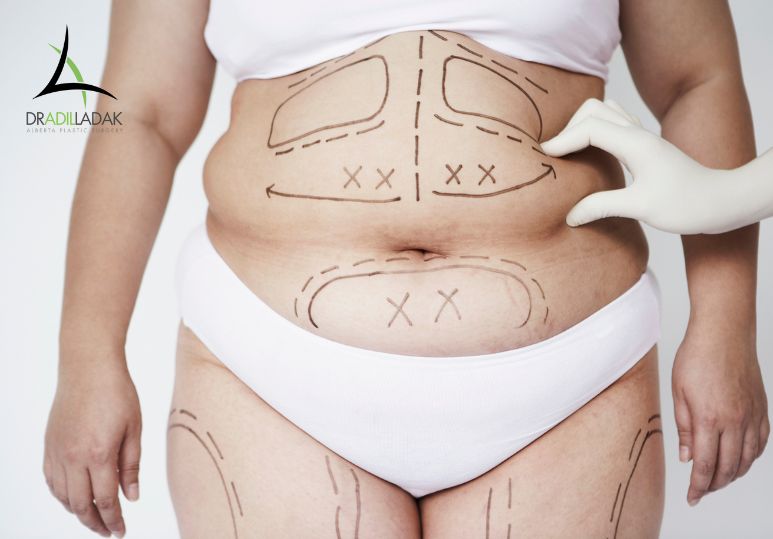
WHAT LIPOSUCTION IS MEANT TO ACHIEVE
Liposuction procedures are best suited for patients who struggle with specific areas of stubborn fat despite maintaining a healthy lifestyle. Common treatment areas include the abdomen, flanks, thighs, arms, back, and neck. Liposuction permanently removes fat cells from these areas, helping refine body shape and improve proportions.
It is important to understand that liposuction does not tighten loose skin or repair weakened abdominal muscles. Patients seeking dramatic changes in weight or correction of significant skin laxity may be disappointed if liposuction is used alone. When performed on the right candidate, however, liposuction delivers subtle but meaningful contour improvements that look natural and balanced.
BODY WEIGHT, GOALS, AND EXPECTATIONS
A key factor in determining liposuction candidacy is weight stability. Ideal candidates are generally close to their goal weight and have maintained that weight consistently. Large weight changes before or after surgery can negatively affect results and may lead to uneven contours.
Equally important are realistic expectations. Liposuction enhances shape rather than transforms the body entirely. Patients who understand that liposuction is a contouring tool, not a substitute for diet or exercise, tend to be more satisfied with their outcomes. Clear communication during consultation helps align surgical plans with achievable results.
SKIN QUALITY AND HOW IT AFFECTS RESULTS
Skin elasticity plays a critical role in how well the body adapts after liposuction surgery. When fat is removed, the skin must contract smoothly to reveal the new contour underneath. Patients with firm, elastic skin often experience smoother and more defined results.
Those with reduced skin elasticity, often due to aging, pregnancy, or major weight loss, may notice skin laxity after fat removal. In these cases, combining liposuction with skin-tightening procedures or opting for alternatives such as a tummy tuck may provide better overall outcomes. Evaluating skin behavior is a core part of determining candidacy.
HEALTH, LIFESTYLE, AND LONG-TERM SUCCESS
Good overall health is essential for safe surgery and predictable healing. Candidates for liposuction should not have uncontrolled medical conditions that could increase surgical risk or delay recovery. Smoking, in particular, can impair circulation and slow healing, making non-smokers or those willing to quit better candidates.
Long-term success also depends on lifestyle habits. Maintaining a balanced diet, staying active, and following post-operative instructions all help preserve results. Liposuction removes fat cells permanently, but remaining fat cells can still enlarge if weight gain occurs. A personalized consultation ensures that each patient receives guidance tailored to their body, goals, and long-term health.
FAQs
Q: WHO IS CONSIDERED A GOOD CANDIDATE FOR LIPOSUCTION?
A: A good candidate for liposuction is close to their ideal weight, has good skin elasticity, and wants to target stubborn fat that does not respond to diet or exercise.
Q: CAN LIPOSUCTION FIX LOOSE SKIN?
A: No. Liposuction removes fat but does not tighten loose skin. Patients with skin laxity may require additional procedures for optimal results.
Q: HOW DO I KNOW IF LIPOSUCTION IS RIGHT FOR ME?
A: The best way to determine liposuction eligibility is through a consultation with a qualified plastic surgeon who can assess skin quality, health, and goals together.