
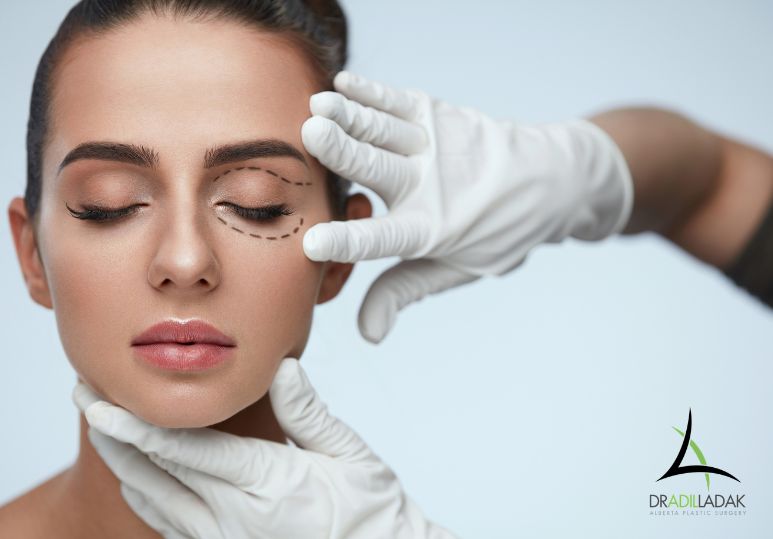
Upper Eyelid Surgery
Upper eyelid surgery focuses on the area above the eye and is typically performed to correct excess skin and drooping eyelids.
Common concerns addressed include:
- Sagging or loose upper eyelid skin
- A “heavy” or tired appearance
- Reduced eyelid definition
- In some cases, impaired vision due to excess skin
As the skin loses elasticity over time, it can begin to fold over the natural crease of the eyelid. This can create both cosmetic and functional concerns. In more advanced cases, excess skin may interfere with peripheral vision.
Upper eyelid surgery involves:
- Removing excess skin
- Adjusting or removing small amounts of fat
- Refining the natural contour of the eyelid
The goal is to create a more defined, refreshed appearance while maintaining a natural look.
Patients often notice:
- A more open eye appearance
- Improved eyelid contour
- Reduced heaviness in the upper eyelid area
Recovery is generally straightforward, with most patients returning to normal activities within a short period. Results are long-lasting, although natural aging will continue over time.
Lower Eyelid Surgery
Lower eyelid surgery targets the area beneath the eyes and is commonly used to address puffiness, under-eye bags, and excess skin.
Common concerns include:
- Under-eye bags
- Puffiness caused by fat displacement
- Loose or sagging lower eyelid skin
- Dark or shadowed appearance under the eyes
Unlike the upper eyelid, where excess skin is often the main issue, lower eyelid concerns are frequently related to fat pads shifting or becoming more prominent.
Lower eyelid surgery may involve:
- Repositioning or removing fat deposits
- Tightening the skin
- Smoothing the transition between the lower eyelid and cheek
The goal is to reduce puffiness and create a smoother, more even contour under the eyes.
Patients typically notice:
- Reduced under-eye bags
- A smoother, less tired appearance
- Improved facial balance in the eye area
Recovery may involve temporary swelling or bruising, but most patients return to regular activities within a few weeks.
Choosing the Right Approach
Upper and lower eyelid surgery address different concerns, and in some cases, both procedures may be recommended to achieve balanced results.
The right approach depends on several factors:
- Location of the concern
Upper eyelid issues involve sagging skin above the eye, while lower eyelid concerns relate to puffiness or bags below the eye. - Skin elasticity
Skin quality plays a major role in determining how the eyelids respond to treatment. - Fat distribution
The presence and position of fat deposits influence whether volume needs to be reduced or repositioned. - Functional vs cosmetic needs
Upper eyelid surgery may be performed for both functional and cosmetic reasons, while lower eyelid surgery is typically cosmetic.
Some patients benefit from combining both procedures to address the entire eye area. This approach can create a more consistent and natural result, especially when aging affects both the upper and lower eyelids.
It is also important to understand that eyelid surgery is not intended to change the fundamental shape of the eyes. Instead, it enhances the existing structure by removing or repositioning excess tissue.
Expected outcomes include:
- A more refreshed and rested appearance
- Improved eyelid contour
- Reduction in visible signs of aging around the eyes
Results vary depending on individual anatomy, skin quality, and overall facial structure. A personalized assessment helps determine the most appropriate treatment plan.
FAQ's
Q: WHAT IS THE DIFFERENCE BETWEEN UPPER AND LOWER EYELID SURGERY?
A: Upper eyelid surgery removes excess skin and improves drooping above the eye, while lower eyelid surgery targets under-eye bags, puffiness, and loose skin below the eye.
Q: CAN UPPER AND LOWER EYELID SURGERY BE DONE TOGETHER?
A: Yes. Many patients choose to combine both procedures to address the full eye area and achieve more balanced, consistent results.
Q: HOW LONG DO EYELID SURGERY RESULTS LAST?
A: Results are long-lasting, often for many years. However, natural aging continues, and outcomes depend on factors such as skin quality and lifestyle.