
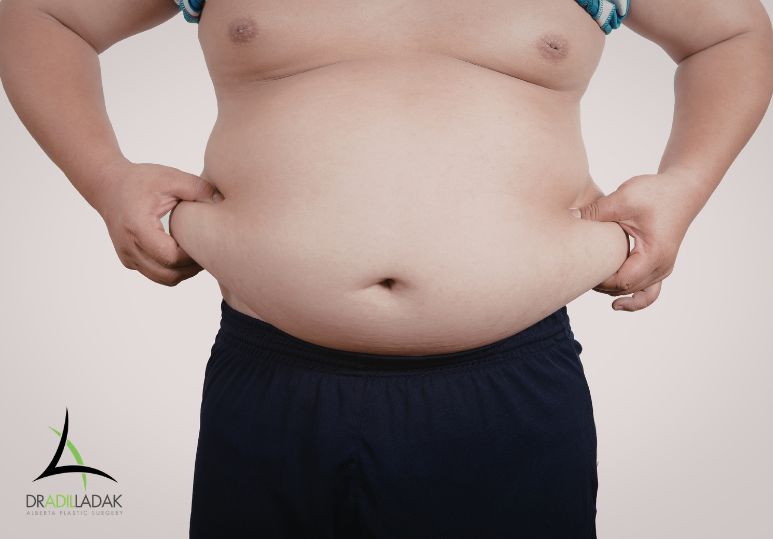
TREATMENT AREAS FOR MEN
While liposuction has traditionally been associated with women, demand for liposuction for men has grown significantly in recent years. Many men pursue liposuction to address stubborn fat deposits that remain despite consistent training and healthy habits. These fat pockets can obscure muscle definition and affect overall body proportions.
The abdomen and flanks are among the most common liposuction treatment areas for male patients. Fat accumulation in the midsection can soften the appearance of abdominal muscles and widen the waistline. Targeted fat removal in these areas helps improve contour while preserving a natural, masculine silhouette.
The chest is another area frequently treated in male patients. Some men develop excess fat in the chest region, sometimes referred to as pseudogynecomastia. Liposuction can reduce fatty tissue and improve chest contour when glandular tissue is not the primary concern.
Chin and neck liposuction are also increasingly requested by male patients seeking stronger jawline definition. Removing localized fat beneath the chin can create a more structured profile and enhance facial balance.
MALE LIPOSUCTION
Male anatomy differs from female anatomy in several ways that influence liposuction treatment planning. Men typically store fat differently and often have thicker skin and denser connective tissue. These differences require careful technique to achieve natural-looking results.
For male patients, the goal of liposuction is usually contour refinement rather than dramatic reshaping. Surgeons focus on preserving masculine body lines, particularly around the abdomen and waist. Removing too much fat in certain areas can create unnatural contours, so precision and moderation are important.
Another important consideration is muscle visibility. Many men pursue body contouring procedures to enhance the appearance of muscle definition. Strategic fat removal can highlight natural muscle structure while maintaining proportion across the torso.
Because male fat tissue can be more fibrous, certain modern liposuction techniques, such as power-assisted liposuction, may be used to improve efficiency and control during the procedure.
RECOVERY AND RESULTS
Recovery following liposuction for men is similar to the recovery experienced by other liposuction patients. Most men experience swelling, bruising, and mild discomfort during the early healing period. Compression garments are typically worn for several weeks to support healing and help the skin adapt to the new contours.
Light walking is encouraged shortly after surgery to promote circulation, but strenuous activity and heavy exercise should be avoided until cleared by the surgeon. Many patients return to desk-based work within about one week, depending on the extent of treatment.
Results develop gradually as swelling decreases. Early improvements may be noticeable within several weeks, but final contour definition can take several months to fully appear. Because liposuction permanently removes fat cells from treated areas, results can be long-lasting when patients maintain a stable weight and healthy lifestyle habits.
At Alberta Plastic Surgery, consultations emphasize realistic expectations and individualized planning. The goal is to enhance natural male contours while maintaining long-term balance and proportion. When performed on appropriate candidates, liposuction can help men achieve a more defined appearance that complements their existing body structure.
FAQs
Q: IS LIPOSUCTION COMMON FOR MEN?
A: Yes. Demand for liposuction procedures among men has increased as more patients seek targeted fat removal and body contouring.
Q: WHAT ARE THE MOST COMMON LIPOSUCTION AREAS FOR MEN?
A: Common treatment areas include the abdomen, flanks, chest, and chin, where stubborn fat can affect body definition.
Q: ARE RESULTS FROM MALE LIPOSUCTION PERMANENT?
A: Fat cells removed during liposuction for men are permanently eliminated, but maintaining stable weight helps preserve long-term results.