
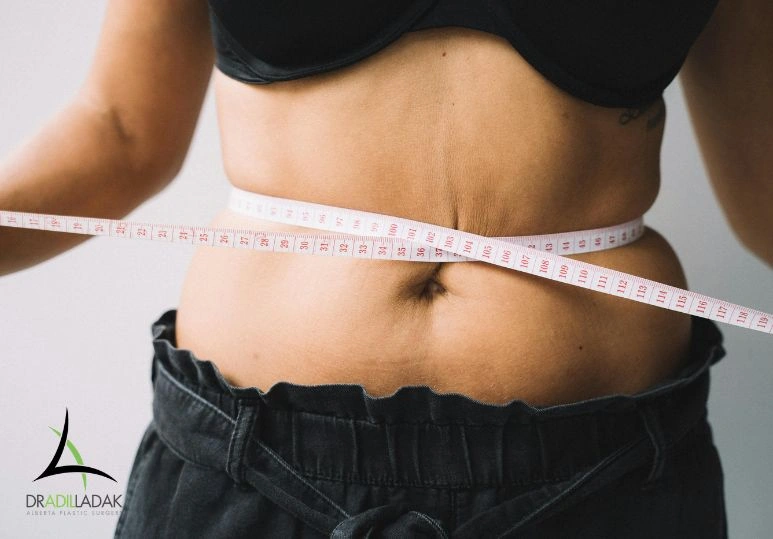
A tummy tuck, also called abdominoplasty, removes excess skin and fat from the abdomen and repairs muscles that have separated or weakened over time. At Alberta Plastic Surgery in Edmonton, Dr. Adil Ladak performs both full and mini abdominoplasty, and the right option depends on how much skin laxity you have, where it sits, and whether your abdominal muscles need repair. This guide walks through how the tummy tuck procedure works, who makes a good candidate, how a full tummy tuck compares with a mini tummy tuck, what recovery looks like, and the main factors that shape tummy tuck cost in Edmonton.
Tummy tuck surgery is designed to correct three things that exercise alone cannot fix: loose, overstretched skin, stubborn fat in the lower abdomen, and abdominal muscles that have pulled apart. Muscle separation, often called diastasis recti, is common after pregnancy and can leave the stomach rounded even at a healthy weight.
During a full abdominoplasty, the patient is placed under general anaesthetic. Your surgeon makes a horizontal incision above the pubic line, repairs the weakened abdominal muscles, and removes unwanted skin and fat. The remaining skin is then redraped for a smoother contour, and the incision is closed with absorbable sutures. The result is a stomach profile that is flatter, firmer, and more defined.
A tummy tuck is a body contouring procedure, not a weight loss procedure. It works best on patients who are already close to their goal weight and want to address the skin and muscle changes left behind.
You may be a good candidate for abdominoplasty if:
Timing matters too. Many surgeons recommend waiting until you are finished having children, because a future pregnancy can stretch the muscles and skin again. The same applies to weight: large changes after surgery can affect your results, so reaching a stable weight first gives your tummy tuck the best chance of lasting.
Alberta Plastic Surgery offers two types of abdominoplasty, and the right one depends on how far your skin and muscle changes extend.
A mini tummy tuck usually involves a shorter incision and a simpler recovery, which is why it appeals to patients searching for a minimal scarring tummy tuck. The trade-off is that it cannot correct skin laxity or muscle separation above the belly button. Choosing a mini procedure when you really need a full one can leave you with results that fall short, so your consultation should include an honest look at the whole abdomen.
Many patients also ask about a tummy tuck with liposuction. Liposuction can be combined with other cosmetic procedures, and adding it to abdominoplasty can help refine the flanks or waistline for a more balanced shape. Whether it makes sense for you depends on where you carry stubborn fat and how much skin needs to be removed.
Most patients are able to resume their regular activities within a few weeks of abdominoplasty. Dr. Ladak provides detailed instructions for caring for the treated area, and following them closely is one of the best ways to protect your results.
What to expect in the early stages:
Planning ahead makes recovery easier. Arrange help at home for the first few days, set up a comfortable resting area, and plan time away from work based on how physical your job is. For a more detailed breakdown, see our tummy tuck recovery timeline.
Tummy tuck prices vary from patient to patient because every procedure is planned around a different body. The main factors include:
Because a cosmetic tummy tuck is elective, it is generally not covered by Alberta Health. Removing an overhanging apron of skin for medical reasons, called a panniculectomy, may be assessed differently, so it is worth asking about if you have related health concerns. To make surgery more manageable, Alberta Plastic Surgery offers financing through Medicard, which pays the clinic up front and lets you repay in monthly instalments.
The skill of your abdominoplasty surgeon has a direct effect on your scar placement, your belly button’s appearance, and how natural your final contour looks. When you compare surgeons, look for:
At Alberta Plastic Surgery, Dr. Adil Ladak is a board-certified plastic surgeon who earned his medical degree at the University of Alberta and completed fellowships at the Mayo Clinic and the University of British Columbia. He works with patients across Edmonton and Alberta to plan body contouring that fits their anatomy and goals. You can review real patient results in the before and after gallery, then book a consultation to discuss whether a full or mini tummy tuck is right for you.
Q: How much does a tummy tuck cost in Edmonton?
A: Tummy tuck cost in Edmonton depends on whether you need a full or mini abdominoplasty, whether muscle repair or liposuction is included, and anaesthesia and facility fees. Because each plan is personalized, Alberta Plastic Surgery confirms pricing after your consultation. Financing through Medicard is available.
Q: Is a mini tummy tuck cheaper and easier to recover from?
A: A mini tummy tuck is a less extensive surgery than a full abdominoplasty, so it often involves a shorter incision and an easier recovery, and it may cost less. It only treats the area below the belly button, though, so it is not a substitute for a full tummy tuck when skin or muscle changes extend higher.
Q: Will I have a scar after a tummy tuck?
A: Yes. Every tummy tuck leaves a scar, but it is placed low, above the pubic line, so it can usually be hidden by underwear or a swimsuit. A mini tummy tuck typically has a shorter scar. Scars fade gradually over many months, and following your aftercare instructions helps them heal as well as possible.

Loren ipsum dolor sit amet, quod omnesque sea te. Qui latine fabellas ad, fastidii scaevola instructior ad est. Malorum democritum duo ea, usu sale viris insolens no, cu probo semper tamquam sea. Ex assum officiis omittantur vel, docendi corpora sed in. Erant clita dictas sea ex, prima quodsi postulant ad usu. Mucius incorrupte duo an, qui exerci recteque reformidans in.